|
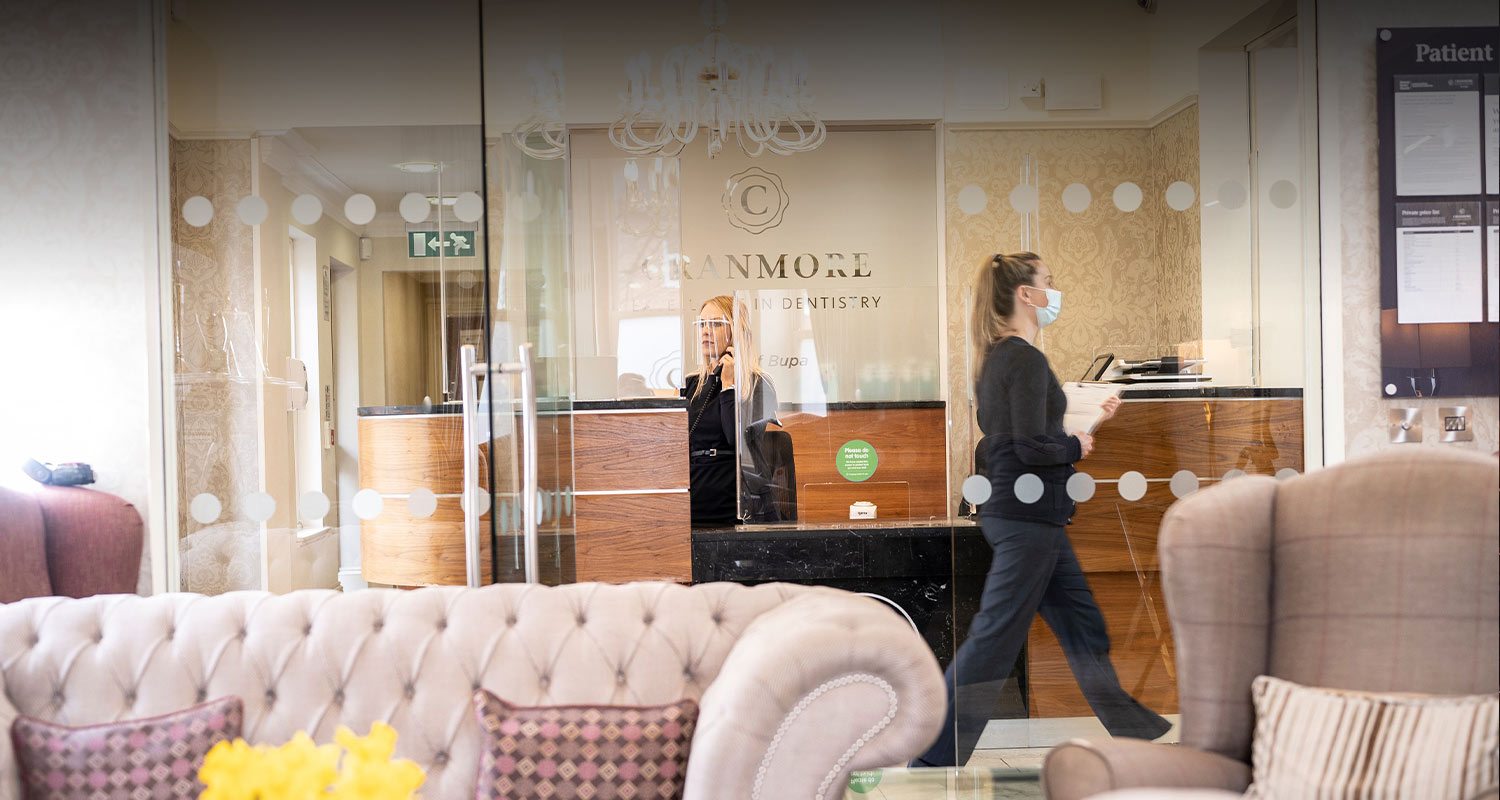
About Us Background Cranmore Dental & Implant Clinic is situated in Belfast on the prestigious Lisburn road. Cranmore Dental & Implant Clinic provides you with a unique dental experience that embraces state of the art technology with complete patient satisfaction. We have been creating bright, beautiful and spontaneous smiles since opening our contemporary practice in Cranmore. At Cranmore we help train dentists in the provision and restoration of dental implants and cosmetic treatments. In addition the dentists in the practice lecture to both international and local dentists. We pride ourselves in quality and regularly attend international conferences relating to cosmetic treatments. In particular, Dr David Nelson has attained a specific qualification in Dental Implantology from the University of Warwick. We are members of the British Academy of Cosmetic Dentistry, British Society of Oral Implantology and the Association of Dental Implantology. The treatments the practice offers include complete smile makeovers, full mouth rehabilitations, dental implants, veneers, crowns & bridges, teeth whitening and safe removal of silver mercury fillings. All in all making us one of Ireland ’s leading cosmetic practices. Please contact us today for an appointment or a complimentary practice brochure. We offer a courtesy pick-up and drop-off service to and from George Best City Airport in Belfast and from Central Train Station. Dr David Nelson BDS, MSc (Imp. Dent.) Cranmore Dental & Implant Clinic is situated in Belfast on the prestigious Lisburn road. Dr David Nelson is the principal dentist at Cranmore Dental & Implant Clinic. He holds a Masters Degree in Dental Implantology from the University of Warwick and has a special interest in dental implants and cosmetic treatments. Dr. Nelson is a tutor on the Masters Degree Course in Implant Dentistry at The University of Warwick and delivers lectures to groups of international and local dentists relating to dental implants. He is the Northern Ireland Facilitator for the British Society of Oral Implantology through which he runs regular study groups for other dentists. Dr Nelson has completed the world renowned Dr. Christopher Orr year long Cosmetic Dentistry Course in London. He is the Cosmetic Dental Editor for "Rejuvenate Magazine" – Ireland’s first dedicated Cosmetic Enhancement Magazine. Dr. Nelson also runs the Study Clubs for the British Academy of Cosmetic Dentistry in Northern Ireland. His practice regularly receives referrals from other dental professionals for complex implant and cosmetic dental treatments. He is a member of the British Society of Oral Implantology (BSOI), Association of Dental Implantology (ADI), International Team for Implantology (ITI), The British Academy of Cosmetic Dentistry (BACD), The Society for the Advancement of Anaesthesia in Dentistry (SAAD) and The British Dental Association (BDA). Treatments Dental Implants Cranmore Dental & Implant Clinic is situated in Belfast on the prestigious Lisburn road. Implants are one way of replacing missing teeth. A post is planted in the jaw bone to support a replacement tooth. This acts like the root of a natural tooth. Implants can also be used to support fixed bridges or dentures. Implant treatment has two stages. First, the implant is placed in the jaw. Then, when the jaw has healed, replacement teeth are attached to the implant. Single Implant Replace Missing Tooth What will my dentist do? First, you should decide whether implants could be right for you. Ask your dentist about the stages of treatment, about who would be carrying out each stage and the timetable for completing treatment. If you decide to go ahead, this is what will happen: Implants are put into holes in the jaw with a local or general anaesthetic. The implant is screwed or pushed in and the gum is stitched so that it heals over the implant. Under the gum, the bone then grows round the implant to hold it firm. This takes several months. Cosmetic Treatments A feeling of confidence about your appearance can affect the way in which you conduct yourself and how you are perceived, personally and professionally. We offer a full range of cosmetic options from a full smile makeover to individual treatments. Teeth Whitening Teeth are stained by the foods and drinks we consume. Smoking further stains teeth and the natural bright, white shade becomes darkened. Teeth whitening is a successful and simple method of lightening the colour of your teeth. The degree of whiteness achieved will vary from patient to patient and with the type of bleaching process chosen. Office ZOOM! Teeth Whitening Your teeth can be lightened immediately using this technique which is conducted in our Dental Practice. Our Office 1-hour power whitening can whiten teeth by up to several shades, brightening your teeth dramatically to its natural shade. Your lips and gums are covered and a gel is applied to your teeth. A special light is positioned over your teeth to activate the gel, which gently penetrates your teeth, breaking up stains and discolouration. Whiter, brighter teeth in less than an hour! Home Whitening A custom made mouth tray is created. A whitening gel is placed in the tray which you then wear whist asleep or for short periods during the day. Results are normally seen over 2 weeks. Porcelain Veneers If your front teeth are stained, chipped, or malaligned, veneers will give you a good life-like appearance with minimum tooth adjustment. A veneer is a porcelain facing on the front of your teeth usually your top teeth, it is just like a false finger nail. Veneers are made out of porcelain and are used mainly for aesthetic reasons. Veneers make teeth look natural and healthy, and because they are very thin and are held in place by a special strong bond (rather like super-glue) very little preparation of the tooth is needed. Porcelain veneers can improve the colour, shape and position of teeth. A precise shade of porcelain can be chosen to give the right colour to improve a single discoloured or stained tooth or to lighten front teeth (usually the upper ones) generally. Veneers can also be used to close small gaps, when orthodontics (braces) are not suitable. If one tooth is slightly out of position, a veneer can sometimes be fitted to bring it into line with the others. White Fillings If the decay is not too serious, our cosmetic dentist will remove all the decay and restore the tooth with a white (tooth coloured) filling. Our dentists can safely replace silver amalgam fillings with white tooth coloured fillings. Dental decay happens when the enamel and dentine of a tooth become softened by acid attack, producing a cavity (hole). More about decay detection in our Preventive Dentistry section. Gum Contouring Lengthen the appearance of your teeth by reshaping your gums. Shorten, smoothen or level your teeth to improve your smile line. Broken Teeth A veneer can make a chipped tooth look intact again. The porcelain covers the whole of the front of the tooth with a thicker section replacing the broken part. Bonding: sometimes instead of a porcelain veneer, a natural colour 'composite' material is used instead of porcelain. A natural-coloured filling material can be used for minor repairs to front teeth like chipped or broken tooth corners. Crowns A crown is an artificial restoration that fits over the remaining part of a prepared tooth, making it strong and giving it the shape of a natural tooth. A crown is sometimes known as a 'cap'. Crowns are an ideal restoration for teeth that have been broken, or have been weakened by decay or a very large filling. They can be made of porcelain or gold or a combination of these materials. A dental crown could be used for a number of other reasons, for instance: you may have discoloured fillings and would like to improve the appearance of the tooth you may have had a root filling which will need a crown to protect it it may help hold a bridge or denture firmly in place. Dentures Replacing lost or missing teeth has substantial benefits for your health and appearance. A complete or full denture replaces the natural teeth and provides support for cheeks and lips. Without this support, sagging facial muscles can make a person appear older and reduce their ability to eat and speak. A dental denture is an appliance which is worn to replace lost or missing teeth to enable you to enjoy a healthy diet and smile with confidence. A complete or full denture is one that replaces all of the natural teeth in either the upper or lower jaws. A partial denture fills in the spaces created by lost or missing teeth and is attached to your natural teeth with metal clasps or devices called precision attachments. The base of a denture is called a plate and can be made of either acrylic (plastic) or metal. The teeth are normally made of acrylic and can be made to match your natural teeth. This is especially important in the case of partial dentures. Cerec Our dentists use CEREC technology so you can be in and out in a single visit with a permanent, all ceramic crown, onlay, or veneer! For you, the dental patient, this means fewer injections, less drilling, and less time out of your hectic schedule for dental care. Single Appointment Dental Care Most dental restorative methods require more than one visit to the dentist. This means that on the first visit, you get an injection of local anesthesia, your tooth is prepared, an impression taken, and a temporary restoration put on your tooth. You make a second appointment for a couple of weeks later, get another injection, have the temporary prised off (if it hasn't fallen off already), and have a permanent restoration put on. Why go to the dentist a second time when you don't have to? With CEREC, the procedure is done in a single appointment, start to finish. Finest Dental Materials A CEREC tooth restoration isn't just convenient, it is also healthy. Many years ago, dentists had few options to repair decayed and damaged teeth other than amalgam, gold, and other metals. With CEREC, our dentists can use strong, tooth colored ceramic materials to restore your teeth to their natural strength, beauty, and function. These materials closely match the composition of natural tooth structure. This means when you eat hot food and then drink something cold, the restoration and tooth expand and contract at almost equal rates. So, your tooth does not crack, and you can go on enjoying your evening. Also, the materials are chemically bonded to your tooth, so your dentist can save as much healthy tooth tissue as possible while providing you with a dental restoration that strengthens your tooth. Smile Enhancement Your dentist can use CEREC for more than just crowns and fillings. CEREC is capable of producing any single tooth restoration. Chipped or discolored front teeth can be repaired with beautiful CEREC porcelain anterior crowns or veneers. Your smile makes a lasting first impression. Enhance it with CEREC. Worldwide, a CEREC restoration is placed every 20 seconds. With a history of nearly 20 years, this equipment has helped dentists place over 6 million restorations. Using metal free materials that are the closest to your natural enamel, CEREC gives you the highest quality restorative care. Ask our dentists today about single visit CEREC restorative care! Facial Treatments Botox Cranmore Dental & Implant Clinic is situated in Belfast on the prestigious Lisburn road. What is botulinum toxin? Botulinum toxin is a purified bacterial substance that blocks muscle nerve signals. The dentist can safely inject botulinum toxin to weaken facial muscle and diminish unwanted wrinkles and frown lines that appear across the forehead and at the corners of the eyes (crow’s feet). The Botox anti-wrinkle treatment can smooth out age-related wrinkles such as crows feet, frown lines or lines on the forehead. It works in a different way than the injected gels and the effects last between 3 – 5 months. What is BOTOX®? BOTOX® Cosmetic is a simple, non-surgical, physician-administered treatment that can temporarily smooth moderate to severe frown lines between the brows in people from 18 to 65 years of age. It is the only treatment of its type approved by the Food and Drug Administration (FDA). One 10-minute treatment, a few tiny injections and within days there's a noticeable improvement in those persistent lines between the brows, which can last up to 4 months. Results may vary. BOTOX® Cosmetic is a purified protein produced by the Clostridium botulinum bacterium, which reduces the activity of the muscles that cause those frown lines between the brows to form over time. A million people have been treated with BOTOX® Cosmetic since FDA approval in 2002. Not just models and movie stars, but people from all types of professions. BOTOX® Cosmetic can smooth moderate to severe frown lines between your brows for up to 4 months. Restylane Cranmore Dental & Implant Clinic is situated in Belfast on the prestigious Lisburn road. Restylane is a crystal clear gel form of hyaluronic acid, a substance that occurs naturally in the body. Hyaluronic acid holds water, hydrating and giving volume to the skin. Click on the Before & After photos below. Teosyal Cranmore Dental & Implant Clinic is situated in Belfast on the prestigious Lisburn road. Manufactured in Switzerland, Teosyal® is a new range of 100% hyaluronic acid based, wrinkle filling products. These products are highly compatible and are slowly absorbed. Naturally present in the skin, hyaluronic acid preserves moisturising levels in the skin and boosts tone. It is a powerful moisturising agent, the quantity of which in the dermis gradually decreases with age. As a result, the skin dries out and becomes fragile, and the first wrinkles appear.The tissues progressively sag and the face becomes hollow. Injected into the dermis, Teosyal® effectively alleviates this hyaluronic acid deficiency thanks to its high hyaluronic acid concentration. The Teosyal® range consists of different formulations which can restore facial volume, redefine and augment lips and repair cutaneous depressions. In its fluid version, Teosyal®also revitalises the dermis deep down in order to restore skin tone; elasticity and hydration. The main characteristics of the Teosyal® gels is their exceptional viscosity and elasticity. This allows for very effective filling, as well as a better resistance to the deformations of the dermis. Family Dentistry & Prevention Children Dentists Our Dentists aim to prevent dental disease rather than treat it at a later date. Fluoride applications and fissure sealants (tooth coloured sealants) are applied to biting surfaces of children's teeth to prevent decay. Hygiene Dental hygiene treatment includes professionally cleaning the teeth for the patient. This is usually called scaling and polishing. However, perhaps our most important role is showing the patient the best way to keep the teeth free of plaque. The dentist also plays an important role in treating gum disease. Bad Breath Dental Bad breath is a very common problem and there are many different causes. Persistent bad breath is usually caused by the smelly gases released by the bacteria that coat your teeth and gums. However, strong foods like garlic and onions can add to the problem. Smoking is also one of the main causes of bad breath, along with certain illnesses such as nasal and stomach conditions. Bits of food that get caught between the teeth and on the tongue will rot and can sometimes cause an unpleasant smell. So correct and regular brushing is very important to keep your breath smelling fresh. The bacteria on our teeth and gums (plaque) also cause gum disease and dental decay. If you see your dentist regularly this will not only help prevent bad breath but will also let the dentist look for and treat these problems. Gum Disease Treatments Screening for gum disease forms an integral part of your routine examination. What is gum disease? Gum disease describes swelling, soreness or infection of the tissues supporting the teeth. There are two main forms of gum disease: gingivitis and periodontal disease. What is gingivitis? Gingivitis means inflammation of the gums. This is when the gums around the teeth become very red and swollen. Often the swollen gums bleed when they are brushed during cleaning. What is periodontal disease? Long-standing gingivitis can turn into periodontal disease. There are a number of types of periodontal disease and they all affect the tissues supporting the teeth. As the disease gets worse the bone anchoring the teeth in the jaw is lost, making the teeth loose. If this is not treated, the teeth may eventually fall out. What is the cause of gum disease? All gum disease is caused by plaque. Plaque is a film of bacteria which forms on the surface of the teeth and gums every day. Many of the bacteria in plaque are completely harmless, but there are some that have been shown to be the main cause of gum disease. To prevent and treat gum disease, you need to make sure you remove all the plaque from your teeth every day. This is done by brushing and flossing. What happens if gum disease is not treated? Unfortunately, gum disease progresses painlessly on the whole so that you do notice the damage it is doing. However, the bacteria are sometimes more active and this makes your gums sore. This can lead to gum abscesses, and pus may ooze from around the teeth. Over a number of years, the bone supporting the teeth can be lost. If the disease is left untreated for a long time, treatment can become more difficult. How do I know if I have gum disease? The first sign is blood on the toothbrush or in the rinsing water when you clean your teeth. Your gums may also bleed when you are eating, leaving a bad taste in your mouth. Your breath may also become unpleasant. Tooth Decay Detection Decay may or may not cause discomfort; even though it doesn’t hurt, the tooth is deteriorating. Using higher magnification and powerful lighting, it is easier to detect decay at an early stage to prevent excessive tooth damage. When cavities are small, they are much easier and less expensive to treat. Early tooth decay does not tend to show many physical signs. Sometimes the tooth looks healthy, but your dentist will be able to see from an x-ray whether you have any decay under the enamel, any possible infections in the roots, or any bone loss around the tooth. Mouth Cancer Screening Mouth cancer is a malignant growth which can occur in any part of the mouth, including the tongue, lips and throat. Mouth cancers have a higher proportion of deaths per number of cases than breast cancer, cervical cancer or skin melanoma. The mortality rate is just over 50%, despite treatment, with about 1,700 deaths per year in the UK. This is because of late detection. Visit your dentist at once if you notice any abnormal problems or are not sure. Regular dental checkups allow early detection of abnormalities in the mouth. Mouth Cancer Foundation The Mouth Cancer Foundation is a registered charity that raises awareness of mouth cancers and proviedes information and support to patients, carers and health professionals. Giving Up Smoking It's not easy... So that's why this web site is here. Giving up smoking requires preparation, determination, and support. This site is here to help you with each of these. If you're thinking about giving up, have a look-in. Oral Surgery (Extractions) Oral surgery can be provided with sedation for nervous patients. Wisdom Teeth Sometimes there may not be room in your mouth for your wisdom teeth and, as they start to come through, they push against the teeth already there or may start to come through at an angle. When this happens, you might feel some pain or discomfort, so the best thing to do is to visit your dentist. The dentist will probably take an x-ray of your mouth to see how - or if - your wisdom teeth are coming through. From this, they will be able to make a judgement on whether or not to take them out, and how easy or difficult it might be. Extractions can also be done under sedation. Having a tooth out is the same as having an operation and, because of this, you must look after the area to speed healing and to reduce the risk of infection. Here are some pointers: For the first 24 hours, try to avoid eating hot food, don't smoke, don't drink any alcohol and try not to disturb any blood clot which might have formed. Don't rinse your mouth for 24 hours after extraction. After that, rinse gently with warm salty water - half a teaspoon of salt in a glass of water is enough. Brush your teeth as normal to keep your mouth as clean as possible. You may feel some small pieces of bone work their way out of the socket - don't worry, this is perfectly normal. There may be some swelling and a bit of discomfort in the first two to three days. If you need to, take some ordinary painkillers - aspirin, ibuprofen or paracetomol will be fine. If you feel pain a few days after the tooth has been removed, it might be where the blood clot has broken down leaving an empty hole in the gum. This is called a 'dry socket' and will need to be looked at by your dentist. Simply go back and the dentist will pack the wound to ease your discomfort. Your dentist may have given you some gauze to place onto the area where the tooth has been removed - if not, a clean cloth handkerchief will do just as well (but not a paper tissue). Roll it into a small firm pad large enough to fit over the gap (probably around 1cm by 3cm). Sit up and gently clear away any blood clots around the gap using the gauze or hanky. Put a clean pad over the gap (from tongue side to cheek side) and bite down on it firmly for 10 to 15 minutes. Take the pad off and check whether the bleeding has stopped. If not, apply a fresh pad and contact your dentist Root Canal Therapy What is root canal treatment? Root canal treatment (also called endodontics) is needed when the blood or nerve supply of the tooth (known as the pulp) is infected through decay or injury. Why is root canal treatment needed? If the pulp becomes infected, the infection may spread through the root canal system of the tooth. This may eventually lead to an abscess. If root canal treatment (RCT) is not carried out, the infection will spread and the tooth may need to be taken out. Does it hurt? No. A local anaesthetic is used and it should feel no different to having an ordinary filling done. What does it involve? The aim of the treatment is to remove all infection from the root canal. The root is then cleaned and filled to prevent any further infection. Root canal treatment is a skilled and time-consuming procedure. Most courses of treatment will involve two or more visits to your dentist. At the first appointment, the infected pulp is removed. Any abscesses, which may be present, can also be drained at this time. The root canal is then cleaned and shaped ready for the filling. A temporary filling is put in and the tooth is left to settle. The tooth is checked at a later visit and when all the infection has cleared, the tooth is permanently filled. What will my tooth look like after treatment? In the past, a root filled tooth would often darken after treatment. However, with modern techniques this does not usually happen. If there is any discolouration, there are several treatments available to restore the natural appearance. What if it happens again? Root canal treatment is usually very successful. However, if the infection comes back the treatment can be repeated. What if I don’t have the treatment? The alternative is to have the tooth out. Once the pulp is destroyed, it can’t heal and it is not recommended to leave an infected tooth in the mouth. Although some people would prefer an extraction, it is usually best to keep as many natural teeth as possible. Will the tooth be safe after treatment? Yes. However, it is better to restore the tooth with a crown to provide extra support and strength to the tooth. Where can this treatment be carried out? Root canal treatment is a routine dental procedure, which your dentist will be happy to do for you. What about aftercare? Root-treated teeth should be treated just the same as any other tooth. Remember to clean your teeth at least once a day, preferably with a fluoride toothpaste. Cut down on sugary snacks, and keep them only to mealtimes if possible. See your dentist for regular check-ups. |